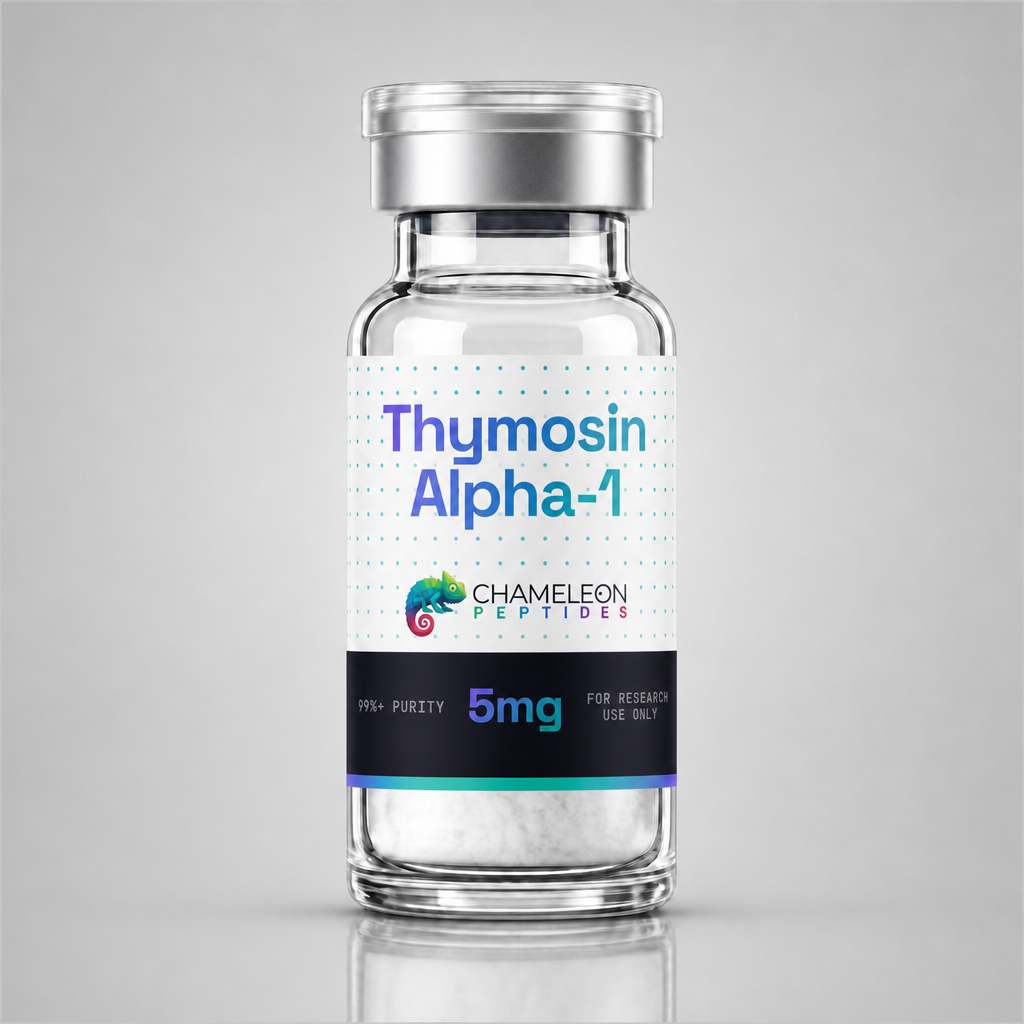
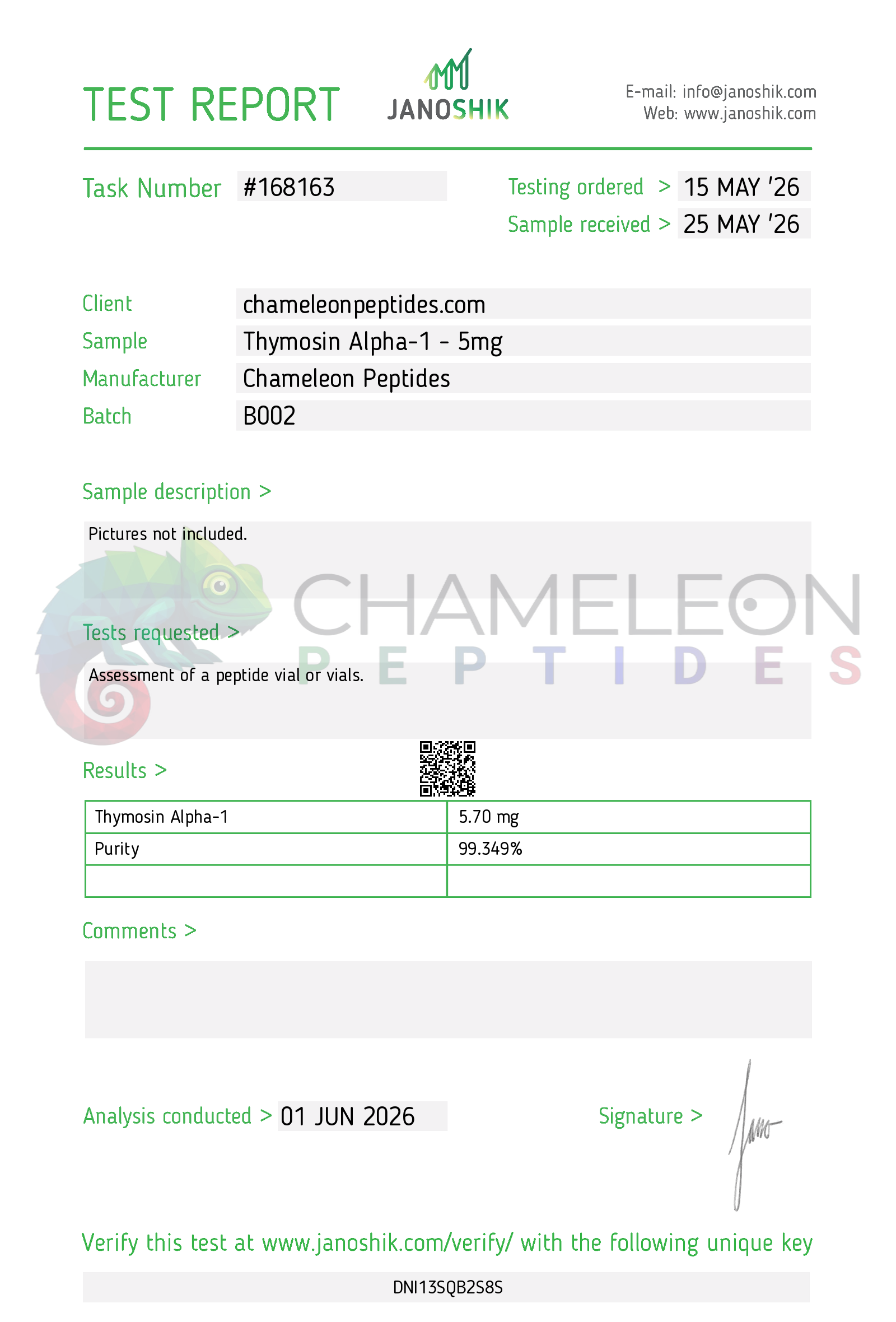
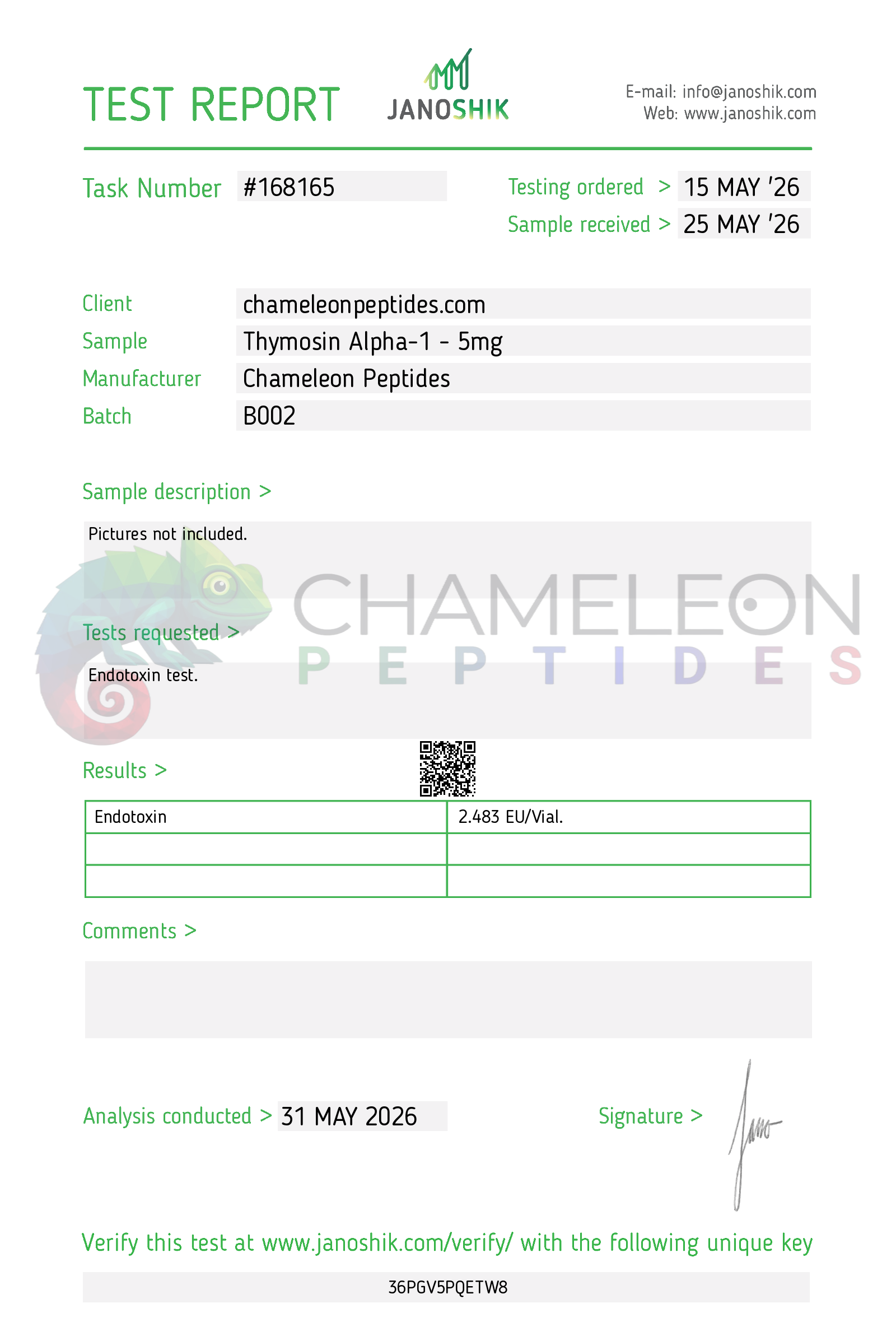
Batch 001 samples are currently in third-party testing. This 5mg/10mg multi-strength product is gated and will not be released until testing is complete and approved.
Thymosin Alpha-1 is an endogenous 28-amino-acid peptide originally characterized from thymic tissue and widely studied for immune-modulating activity. In research literature, the synthetic form is often referred to as thymalfasin or Tα1. It is used in laboratory models involving T-cell differentiation, dendritic-cell signaling, NK-cell activity, cytokine regulation, vaccine-response research, and broader innate/adaptive immune coordination.
Research compound — for laboratory use only.
Thymosin Alpha-1
Thymic Immune-Signaling Peptide — For Research Use Only
Product Details
- Strengths: 5mg and 10mg
- Batch: B001
- Inventory: 40 vials of each strength on hand, gated pending testing
- Form: Lyophilized powder
- Testing: Batch 001 COA testing in progress
- Status: Not available for purchase until testing is complete and approved
Compound Reference
- Synonyms: Thymosin α1, Thymosin Alpha-1, Tα1, TA-1, Thymalfasin
- CAS: 62304-98-7
- Molecular Formula: C129H215N33O55
- Molecular Weight: 3108.28 g/mol
- Sequence: Ac-SDAAVDTSSEITTKDLKEKKEVVEEAEN-OH
- Research target: Immune-signaling pathways involving T-cell maturation, dendritic-cell activation, NK-cell activity, and Toll-like receptor-associated cytokine signaling
Research Context
- Immune modulation: Studied for effects on T-cell function, antigen presentation, dendritic-cell signaling, and innate/adaptive immune coordination.
- Vaccine-response models: Literature has explored Tα1 as an immune-response modulator in vaccine and immunocompromised-response research settings.
- Infection and inflammation models: Reviews discuss use in viral, bacterial, sepsis, and immune-dysregulation research contexts.
- Oncology-adjacent immune research: Thymalfasin has been evaluated in clinical and preclinical literature as an immune-supportive research compound in cancer-related models.
Storage
Store lyophilized powder frozen (-20°C) for long-term storage. After reconstitution, refrigerate (2–8°C) and use within 30 days.
FOR RESEARCH USE ONLY — NOT FOR HUMAN CONSUMPTION