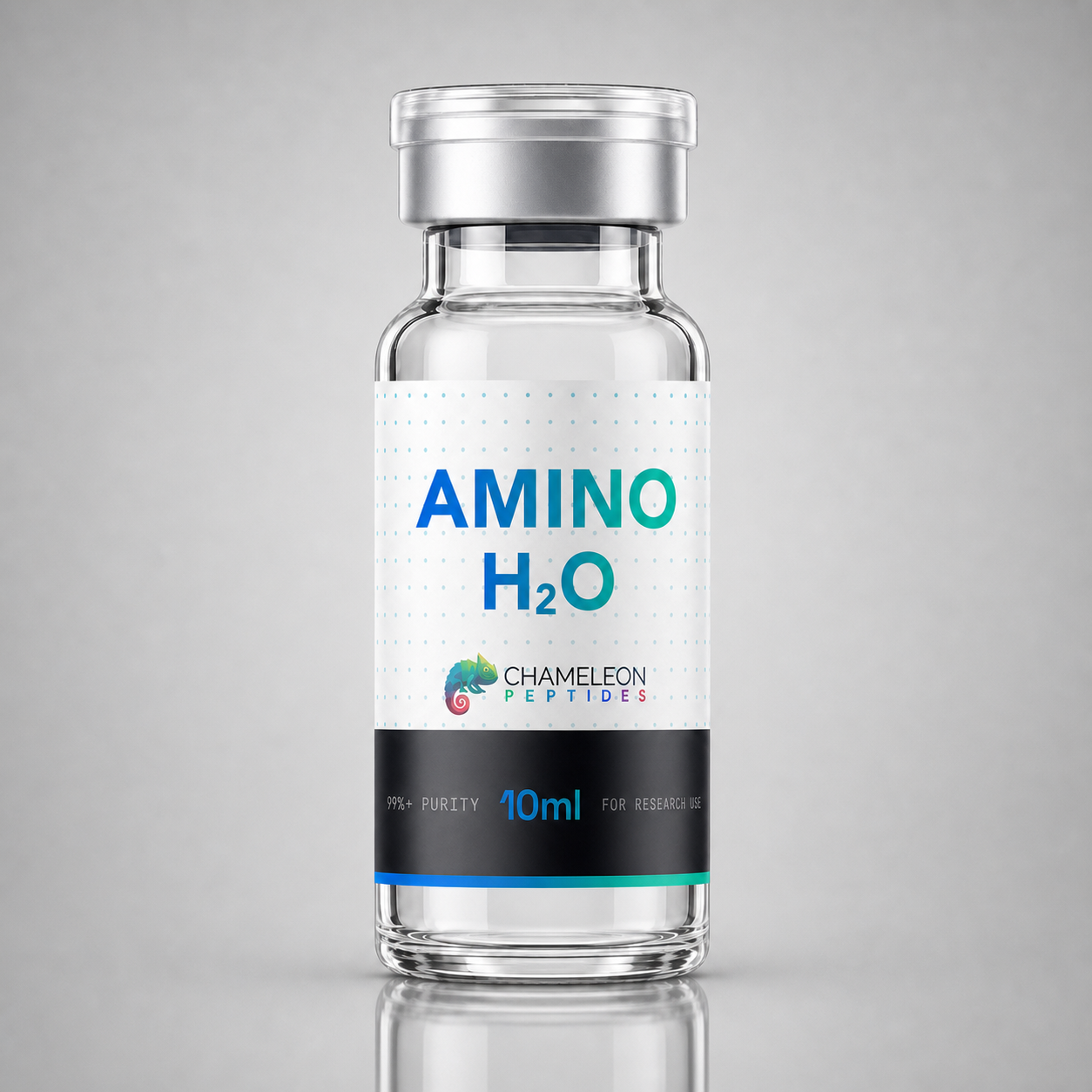
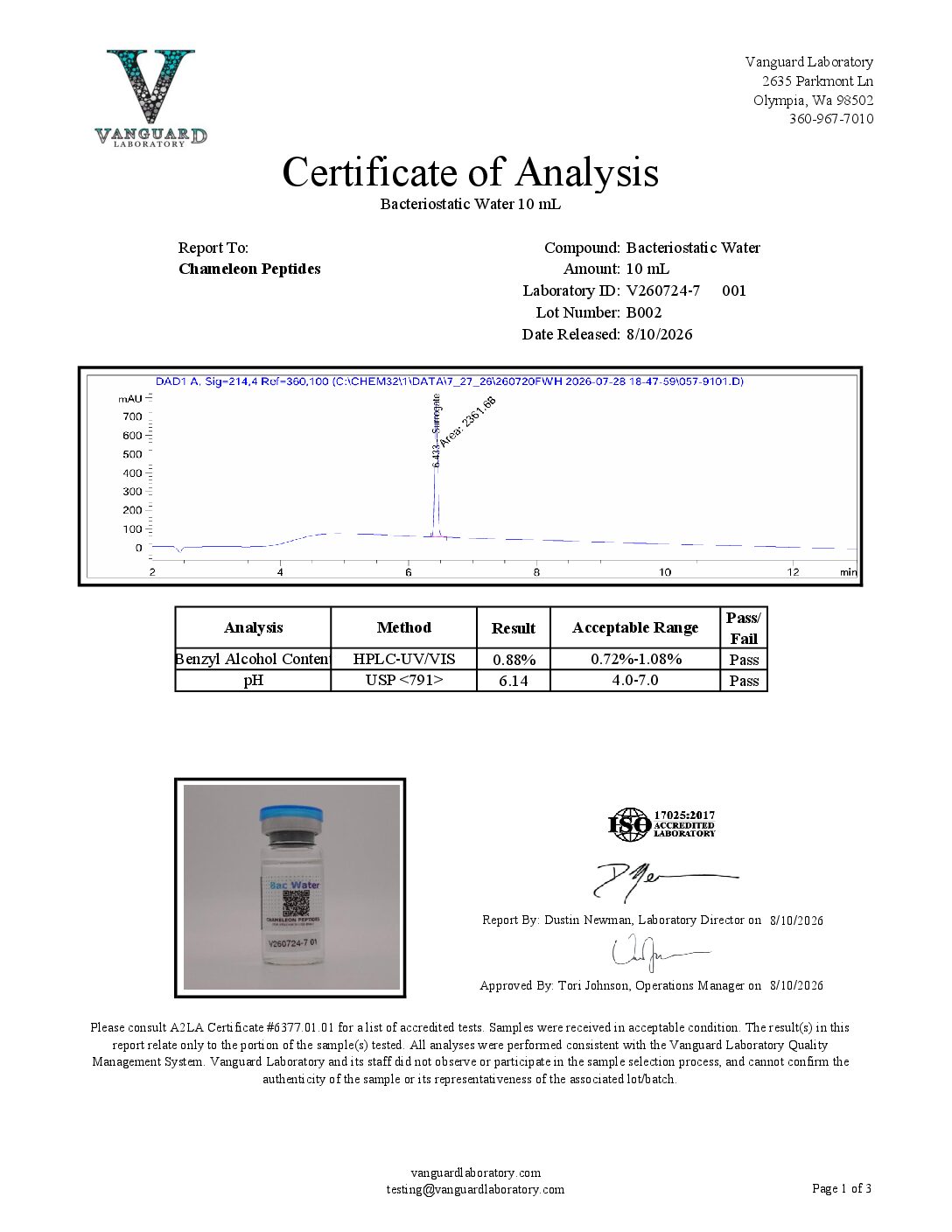
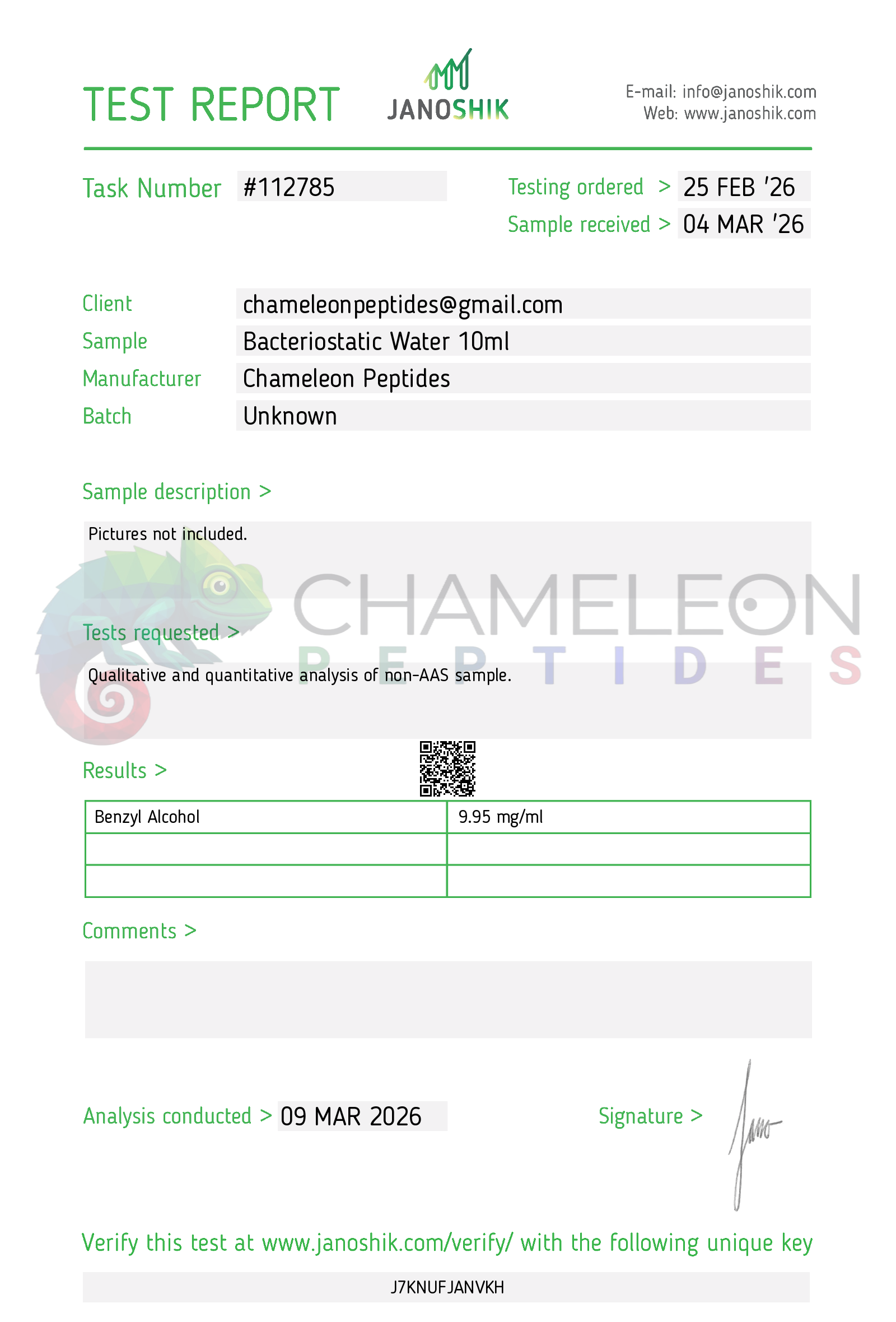
Bacteriostatic Water is sterile water containing 0.9% benzyl alcohol as a preservative. Used as a laboratory diluent for reconstituting lyophilized research compounds.
Laboratory supply — for research use only.
Bacteriostatic Water
Sterile Laboratory Diluent — For Research Use Only
Product Details
- Contents: Sterile water with 0.9% benzyl alcohol
- Form: Sterile aqueous solution
- Volume: 10ml
Storage
Store at room temperature. Do not freeze. Discard within 28 days after first use.
Role in Peptide Research
Bacteriostatic water is the standard reconstitution solvent for the majority of lyophilized research peptides. Its near-neutral pH (~7.0) and aqueous composition provide a compatible environment for dissolving peptide powders while maintaining structural integrity. Unlike sterile water for injection — which is preservative-free and intended for single use — bacteriostatic water contains 0.9% benzyl alcohol (CAS 100-51-6, MW 108.14 Da), enabling multi-use access from a single vial over an extended period.
Why Benzyl Alcohol Matters
Benzyl alcohol at 0.9% concentration provides broad-spectrum bacteriostatic activity, inhibiting microbial growth without the cytotoxicity associated with higher concentrations. This preservative function is critical for research applications where a reconstituted peptide solution will be accessed multiple times over days or weeks. Without bacteriostatic protection, each needle puncture introduces potential microbial contamination, and a preservative-free solution can become a growth medium for bacteria within hours at room temperature. Published standards (USP) specify 0.9% benzyl alcohol as the accepted concentration for bacteriostatic water preparations.
Reconstitution Technique
To reconstitute a lyophilized peptide, draw the desired volume of bacteriostatic water into a sterile syringe. Insert the needle through the vial stopper and direct the stream along the inner glass wall — not directly onto the lyophilized cake. Allow the water to flow down the vial wall and contact the peptide gradually. Once the diluent has been added, swirl the vial gently between your fingers. Do not shake or vortex, as vigorous agitation causes foaming, peptide denaturation, and adsorption to glass surfaces. The peptide should dissolve within 1-5 minutes, producing a clear, colorless solution. If cloudiness or particulates persist, the peptide may require an acidic solvent such as 0.6% acetic acid instead.
Storage and Shelf Life
Store unopened bacteriostatic water at controlled room temperature (15-30°C). Do not freeze — freezing can compromise the sterile seal and alter benzyl alcohol distribution upon thawing. After first puncture, the 28-day use window reflects standard laboratory practice for multi-dose vials. Mark the vial with the date of first use. Reconstituted peptide solutions should be refrigerated at 2-8°C regardless of the bacteriostatic properties of the diluent, as benzyl alcohol inhibits bacterial growth but does not prevent peptide degradation from thermal or enzymatic processes.
Bacteriostatic Water vs. Sterile Water
Sterile water (preservative-free) is intended for single-use applications only. Once opened, it provides no protection against microbial contamination and must be discarded after a single access. For research protocols requiring multiple withdrawals from a reconstituted peptide vial, bacteriostatic water is the appropriate choice. The only scenario where sterile water may be preferred is when benzyl alcohol compatibility is a concern for specific assay systems or cell culture applications where preservative interference must be minimized.
FOR RESEARCH USE ONLY — NOT FOR HUMAN CONSUMPTION