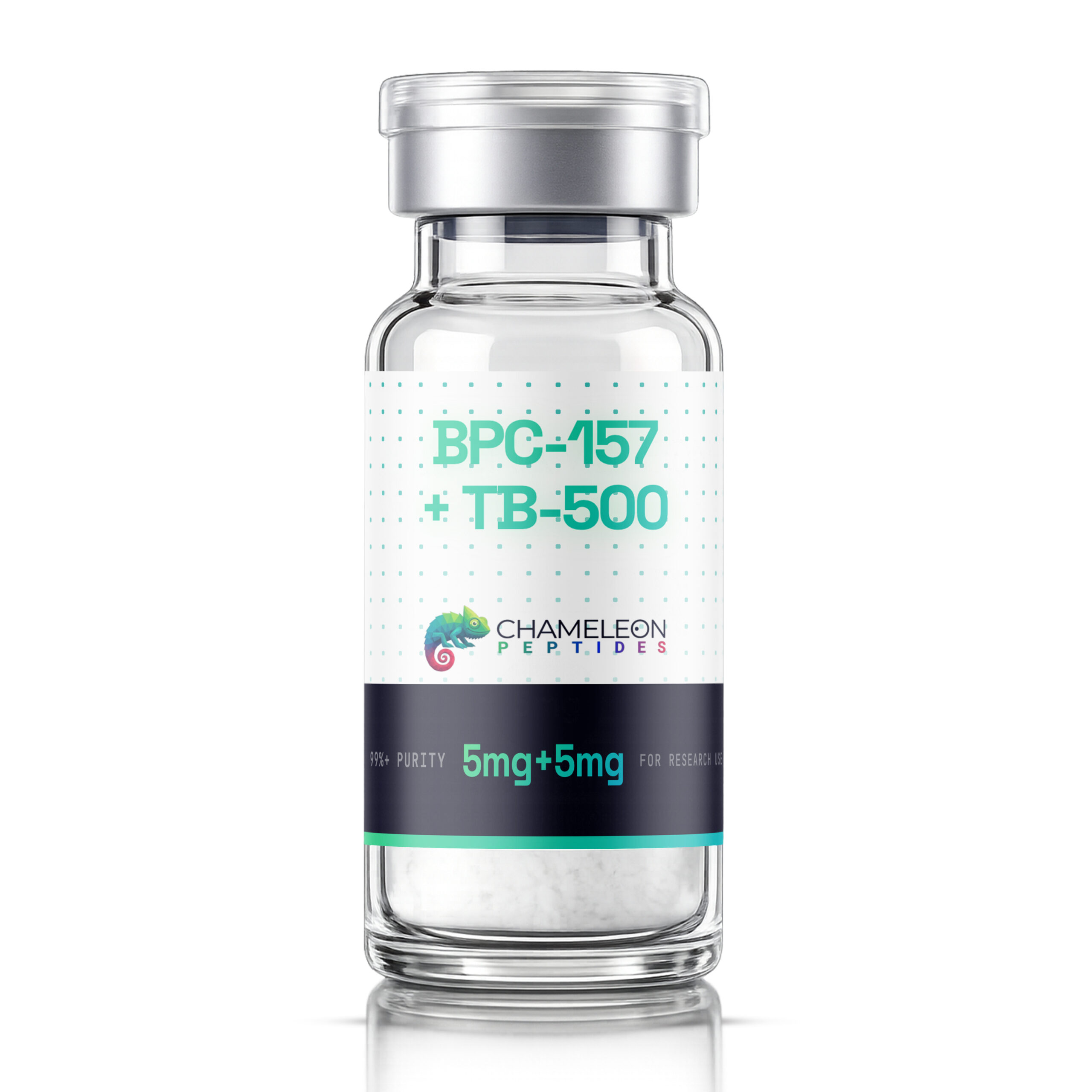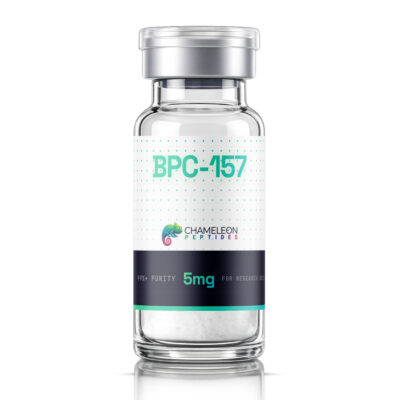
BPC-157 + TB-500 (5mg) โ Complementary Tissue Research Peptide Blend
BPC-157 (Body Protection Compound-157) and TB-500 (a synthetic analog of Thymosin Beta-4) represent two of the most extensively investigated peptides in preclinical tissue repair research. This combination product provides both compounds in a single lyophilized research-grade formulation, enabling investigators to study the interaction between two mechanistically distinct tissue-active peptides โ BPC-157’s nitric oxide system modulation and growth factor pathway involvement, and TB-500’s actin-sequestering and cell migration-promoting properties โ in controlled laboratory settings.
The rationale for combining these two research peptides derives from their complementary mechanisms of action as described in the published preclinical literature. BPC-157, a stable gastric pentadecapeptide, has been primarily characterized through its interactions with the nitric oxide (NO) system, vascular endothelial growth factor (VEGF) signaling, and growth hormone receptor expression in injured tissues. TB-500, representing the biologically active region of Thymosin Beta-4, exerts its preclinical effects primarily through actin monomer sequestration, which regulates the dynamics of actin polymerization critical to cell migration, angiogenesis, and tissue remodeling. These non-overlapping mechanistic profiles have generated research interest in whether their combined activity might demonstrate complementary or synergistic effects in tissue repair paradigms.
BPC-157 is a synthetic pentadecapeptide (15 amino acids) derived from a partial sequence of human gastric juice protein, with remarkable aqueous stability and an extensive preclinical research base spanning over 100 published studies. TB-500 is a 43-amino acid synthetic peptide corresponding to the sequence of Thymosin Beta-4, one of the most abundant intracellular peptides in mammalian cells and a key regulator of the actin cytoskeleton. Together, these compounds provide a research tool for investigating coordinated tissue repair mechanisms involving both extracellular signaling cascades and intracellular cytoskeletal dynamics. This product is supplied exclusively as a lyophilized research-grade powder for laboratory investigation and is not intended for human consumption.
Product Specifications
| Product Name | BPC-157 + TB-500 Blend |
| Total Content | 5 mg (blend) |
| โ Component 1: BPC-157 โ | |
| Full Name | Body Protection Compound-157 |
| Sequence | Gly-Glu-Pro-Pro-Pro-Gly-Lys-Pro-Ala-Asp-Asp-Ala-Gly-Leu-Val |
| CAS Number | 137525-51-0 |
| Molecular Formula | C62H98N16O22 |
| Molecular Weight | 1419.53 Da |
| Amino Acids | 15 |
| โ Component 2: TB-500 โ | |
| Full Name | TB-500 (Thymosin Beta-4 synthetic analog) |
| Parent Protein | Thymosin Beta-4 (Tβ4) |
| CAS Number | 77591-33-4 |
| Molecular Weight | ~4963 Da |
| Amino Acids | 43 |
| Key Functional Domain | Actin-binding domain (central 17-amino acid region, LKKTETQ motif) |
| โ Blend Specifications โ | |
| Purity | ≥99% per component (HPLC verified) |
| Physical Form | Lyophilized (freeze-dried) white powder |
| Solubility | Soluble in bacteriostatic water and aqueous buffers |
| Storage | Lyophilized: -20°C (long-term) or 2–8°C (short-term); Reconstituted: 2–8°C, use within 30 days |
| Intended Use | For research use only. Not for human consumption. |
Preclinical Research Overview
The following sections summarize the published preclinical literature on each component of this research blend, their individual mechanisms of action, and the rationale for their combination. All studies described were conducted in animal models or in vitro laboratory systems. References are provided with PubMed identifiers for verification. This information is presented for educational and research context only and does not constitute any claim regarding efficacy or safety in humans.
BPC-157 Research Profile
BPC-157 is among the most extensively studied research peptides in the preclinical literature, with over 100 published studies examining its activity across gastrointestinal, musculoskeletal, vascular, dermal, neural, and hepatic tissue models. The compound is derived from a partial sequence of human gastric juice protein and is notable for its exceptional aqueous stability โ maintaining structural and functional integrity in human gastric juice for periods exceeding 24 hours without the need for carrier proteins or specialized formulation vehicles.
The preclinical literature on BPC-157 has identified several mechanistic pathways of interest. The compound has been characterized as a modulator of the nitric oxide (NO) system, demonstrating bidirectional regulatory activity โ counteracting both L-NAME (NOS inhibition) and L-arginine (excessive NO production) in experimental models. BPC-157 has also been shown to upregulate VEGFR2 expression and activate the VEGFR2-Akt-eNOS signaling cascade in endothelial cells, as well as to enhance growth hormone receptor (GHR) expression and downstream JAK2-STAT5 signaling in tendon fibroblasts. Across the published preclinical literature, no toxic amount has been identified โ the LD1 was not achieved in any reported toxicology study.
For a comprehensive review of BPC-157’s individual research profile, including detailed discussion of gastrointestinal cytoprotection, musculoskeletal tissue, vascular, and neuroprotection research, please see our dedicated BPC-157 product page.
Key references:
- Sikiric P, Seiwerth S, Rucman R, et al. “Brain-gut Axis and Pentadecapeptide BPC 157: Theoretical and Practical Implications.” Curr Neuropharmacol. 2016;14(8):857-865. PMID: 27138887
- Sikiric P, Drmic D, Sever M, et al. “Stable Gastric Pentadecapeptide BPC 157 and wound repair.” Front Pharmacol. 2021;12:627533. PMC8275860
All BPC-157 data referenced above was obtained from preclinical research models. This product is supplied for research use only.
TB-500 (Thymosin Beta-4) โ Actin Biology and Cell Migration Research
TB-500 is a synthetic peptide corresponding to the amino acid sequence of Thymosin Beta-4 (Tβ4), one of the most abundant and highly conserved peptides in mammalian cells. First isolated from calf thymus tissue by Goldstein and colleagues in the 1960s, Thymosin Beta-4 was subsequently identified as the principal actin-sequestering molecule in eukaryotic cells โ binding to monomeric G-actin (globular actin) in a 1:1 complex and regulating the dynamic equilibrium between G-actin monomers and polymerized F-actin (filamentous actin) filaments that form the cellular cytoskeleton.
The actin cytoskeleton is fundamental to virtually every aspect of cell behavior relevant to tissue biology: cell migration, adhesion, division, intracellular transport, and morphological change. By sequestering G-actin monomers, Thymosin Beta-4 maintains a reservoir of available actin subunits that can be rapidly mobilized when cells need to reorganize their cytoskeleton โ as occurs during cell migration into a wound site, angiogenic sprouting, or immune cell chemotaxis. This actin-regulatory function positions Thymosin Beta-4 as a key modulator of cellular motility and has been the focus of extensive preclinical investigation.
Goldstein et al. (2005) published a landmark review in Trends in Molecular Medicine characterizing Thymosin Beta-4 as an “actin-sequestering protein that moonlights to repair injured tissues.” The review documented that following tissue injury, Thymosin Beta-4 is released by platelets, macrophages, and multiple other cell types at injury sites, where it promotes cell migration, stem/progenitor cell mobilization, angiogenesis, and reduction of inflammatory mediators. The authors described this as a transition from its constitutive intracellular actin-regulatory function to an extracellular signaling role in the context of tissue damage โ a dual function that makes Thymosin Beta-4 unique among known tissue-active peptides.
wound repair Research
Malinda et al. (1999) published the initial characterization of Thymosin Beta-4’s wound repair activity in a rat full-thickness dermal wound model. Topical application of Thymosin Beta-4 accelerated wound closure compared to controls, with enhanced angiogenesis, collagen deposition, and keratinocyte migration observed histologically. This study established the foundational evidence for Thymosin Beta-4 as a tissue repair-promoting peptide and launched a substantial body of subsequent investigation.
Philp et al. (2003) extended these findings by demonstrating that both full-length Thymosin Beta-4 and a synthetic peptide containing its central actin-binding domain promoted dermal wound repair in aged mice โ a model with impaired baseline reparative capacity. The actin-binding domain alone was sufficient to promote cell migration and wound closure, identifying this region as the minimal functional unit for tissue repair activity. This finding is relevant to understanding TB-500’s mechanism, as the intact 43-amino acid sequence incorporates this critical domain.
Sosne et al. (2002) investigated Thymosin Beta-4’s activity in corneal wound repair models, demonstrating accelerated epithelial cell migration and wound closure in vitro. The investigators identified that Thymosin Beta-4 promoted lamellipodium formation โ the sheet-like cellular protrusions that drive directed cell migration โ consistent with its known role in actin cytoskeletal remodeling.
Key references:
- Malinda KM, Sidhu GS, Mani H, et al. “Thymosin beta4 accelerates wound repair.” J Invest Dermatol. 1999;113(3):364-368. PMID: 10469335
- Philp D, Huff T, Gho YS, Hannappel E, Kleinman HK. “The actin binding site on thymosin beta4 promotes angiogenesis.” FASEB J. 2003;17(14):2103-2105. PMID: 14500547
- Sosne G, Szliter EA, Barrett R, Kernacki KA, Kleinman H, Hazlett LD. “Thymosin beta 4 promotes corneal wound repair and decreases inflammation in vivo following alkali injury.” Exp Eye Res. 2002;74(2):293-299. PMID: 11950239
All wound repair data referenced above was obtained from preclinical animal models and in vitro systems. This product is supplied for research use only.
Angiogenesis and Vascular Research
Smart et al. (2007) published a comprehensive review of Thymosin Beta-4’s angiogenic mechanisms and research potential. The review documented that Thymosin Beta-4 promotes angiogenesis through multiple pathways: direct stimulation of endothelial cell migration and tube formation, upregulation of VEGF expression, and activation of integrin-linked kinase (ILK) signaling cascades that promote endothelial cell survival and migration. In cardiac models, Thymosin Beta-4 was shown to mobilize epicardial progenitor cells and promote neovascularization following experimental myocardial injury โ positioning it as a compound of significant interest in cardiovascular preclinical research.
Crockford (2010) provided a broad review of Thymosin Beta-4’s structure, function, and biological properties, emphasizing the diversity of its preclinical applications โ from wound repair and corneal repair to cardiac regeneration and neurological models. The review highlighted that Thymosin Beta-4’s biological activity extends well beyond its canonical actin-sequestering function, encompassing anti-inflammatory, anti-apoptotic, and regenerative properties observed across multiple tissue systems in preclinical research.
Key references:
- Smart N, Risebro CA, Melville AAD, et al. “Thymosin beta4 and angiogenesis: modes of action and research potential.” Angiogenesis. 2007;10(4):229-241. PMID: 17632766
- Crockford D. “Thymosin beta4: structure, function, and biological properties supporting current and future research applications.” Ann N Y Acad Sci. 2010;1194:179-189. PMID: 20536468
All angiogenesis and vascular data referenced above was obtained from preclinical animal models and in vitro laboratory systems. This product is supplied for research use only.
Complementary Mechanisms โ Rationale for Combination Research
The scientific rationale for combining BPC-157 with TB-500 in a research context derives from the non-overlapping and potentially complementary mechanisms through which these peptides have been observed to influence tissue biology in preclinical models. Understanding the mechanistic distinctions between these compounds provides context for researchers investigating whether their combined activity may differ qualitatively or quantitatively from individual administration.
BPC-157: Extracellular Signaling and Vascular Modulation
BPC-157’s preclinical activity profile is characterized by modulation of extracellular signaling cascades, particularly the nitric oxide system and growth factor receptor pathways. Published research has identified the following mechanistic components:
- NO system modulation: Bidirectional regulation, counteracting both excessive and insufficient NO signaling โ suggesting a homeostatic modulatory role rather than unidirectional stimulation or inhibition.
- VEGFR2 pathway activation: Upregulation of VEGFR2 expression and activation of downstream Akt-eNOS signaling, promoting angiogenic responses in the context of tissue injury without nonspecific angiogenic stimulation.
- GHR expression: Enhancement of growth hormone receptor expression and JAK2-STAT5 signaling in fibroblast cultures, potentially amplifying cellular responsiveness to endogenous growth factor signaling.
- Angiomodulation: Context-dependent vascular effects that optimize vessel formation during repair while maintaining vascular homeostasis.
TB-500: Intracellular Cytoskeletal Dynamics and Cell Motility
TB-500’s primary mechanism operates at the level of the actin cytoskeleton โ a fundamentally intracellular process that governs cell migration, the cellular behavior most critical to early wound repair. Key mechanistic components include:
- Actin monomer sequestration: Maintaining a pool of available G-actin monomers for rapid cytoskeletal reorganization when cells need to migrate or change morphology.
- Cell migration promotion: Enhancement of lamellipodium formation and directed cell movement, facilitating the migration of fibroblasts, endothelial cells, keratinocytes, and progenitor cells into wound sites.
- Progenitor cell mobilization: In cardiac and dermal models, stimulation of stem/progenitor cell migration and differentiation at sites of tissue damage.
- Anti-inflammatory activity: Reduction of inflammatory mediator expression, potentially creating a more favorable microenvironment for constructive tissue repair.
Convergence Points
The complementary nature of these mechanisms becomes apparent when considering the sequential requirements of tissue repair: initial inflammatory modulation, establishment of vascular supply (angiogenesis), cell migration into the wound space, extracellular matrix deposition, and tissue remodeling. BPC-157’s characterized activities โ NO system modulation, vascular optimization, growth factor receptor upregulation โ address the signaling and vascular components, while TB-500’s actin-regulatory function directly facilitates the cellular migration and structural reorganization phases. Neither peptide’s primary mechanism of action duplicates or antagonizes the other’s, suggesting the potential for non-redundant, complementary effects.
It should be noted that while the individual mechanistic profiles of BPC-157 and TB-500 are well-characterized in the preclinical literature, studies specifically examining their combined administration remain limited. The rationale for this combination is therefore based on mechanistic complementarity as demonstrated through independent investigations of each component, rather than direct combination studies. This represents an active area of ongoing research interest.
All mechanistic data referenced above derives from published preclinical and in vitro research. This product is supplied for research use only.
Key Properties Summary
Across the published preclinical literature, several distinctive properties of these compounds โ individually and as a combination โ have been described by multiple research groups. These observations, while derived exclusively from preclinical settings, contribute to the research rationale for this dual-component formulation:
- Mechanistic Complementarity: BPC-157 primarily modulates extracellular signaling cascades (NO system, VEGF/VEGFR2, GHR pathways) while TB-500 primarily regulates intracellular actin dynamics and cell migration โ representing non-overlapping mechanisms of action.
- BPC-157 Aqueous Stability: BPC-157 maintains structural integrity in aqueous solution without carrier proteins, including resistance to degradation in human gastric juice for >24 hours โ simplifying laboratory protocols.
- TB-500 Evolutionary Conservation: Thymosin Beta-4 is among the most highly conserved peptides in mammalian biology, with the amino acid sequence virtually identical across all mammalian species studied, suggesting fundamental biological importance.
- Multi-Tissue Activity: Both compounds have individually demonstrated preclinical activity across multiple tissue types (musculoskeletal, dermal, vascular, neural), suggesting involvement of fundamental cellular processes rather than tissue-specific mechanisms.
- Broad Research Literature: BPC-157 has been studied in over 100 published preclinical studies; Thymosin Beta-4 has been investigated in hundreds of publications spanning cell biology, tissue repair, and regenerative research.
- Preclinical Safety Profiles: No toxic amount has been identified for BPC-157 in published preclinical studies. Thymosin Beta-4 has demonstrated a favorable preclinical safety profile across multiple published investigations.
These properties have been observed in preclinical research models only. No claims are made regarding human pharmacology. This product is supplied for research use only.
Certificate of Analysis
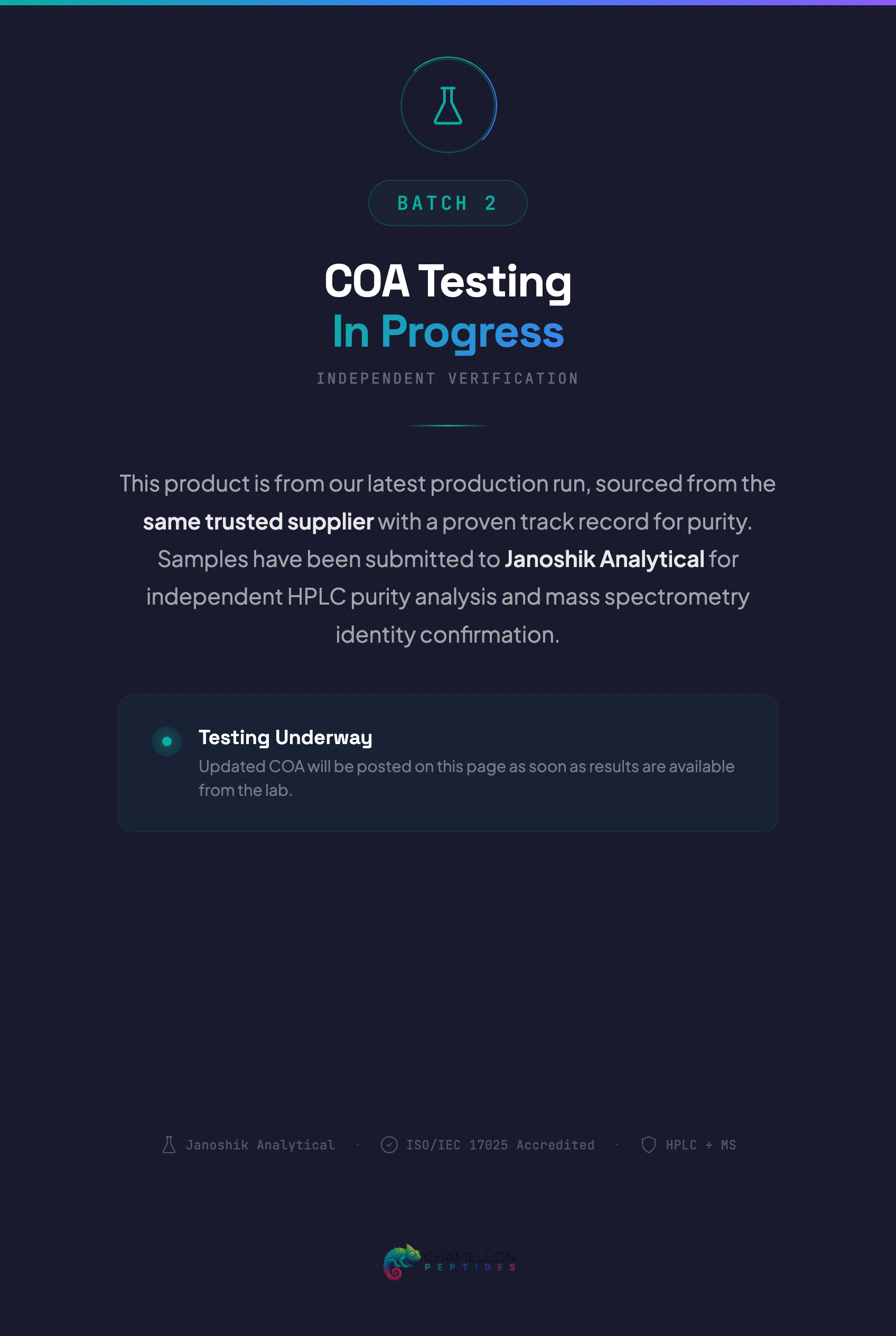
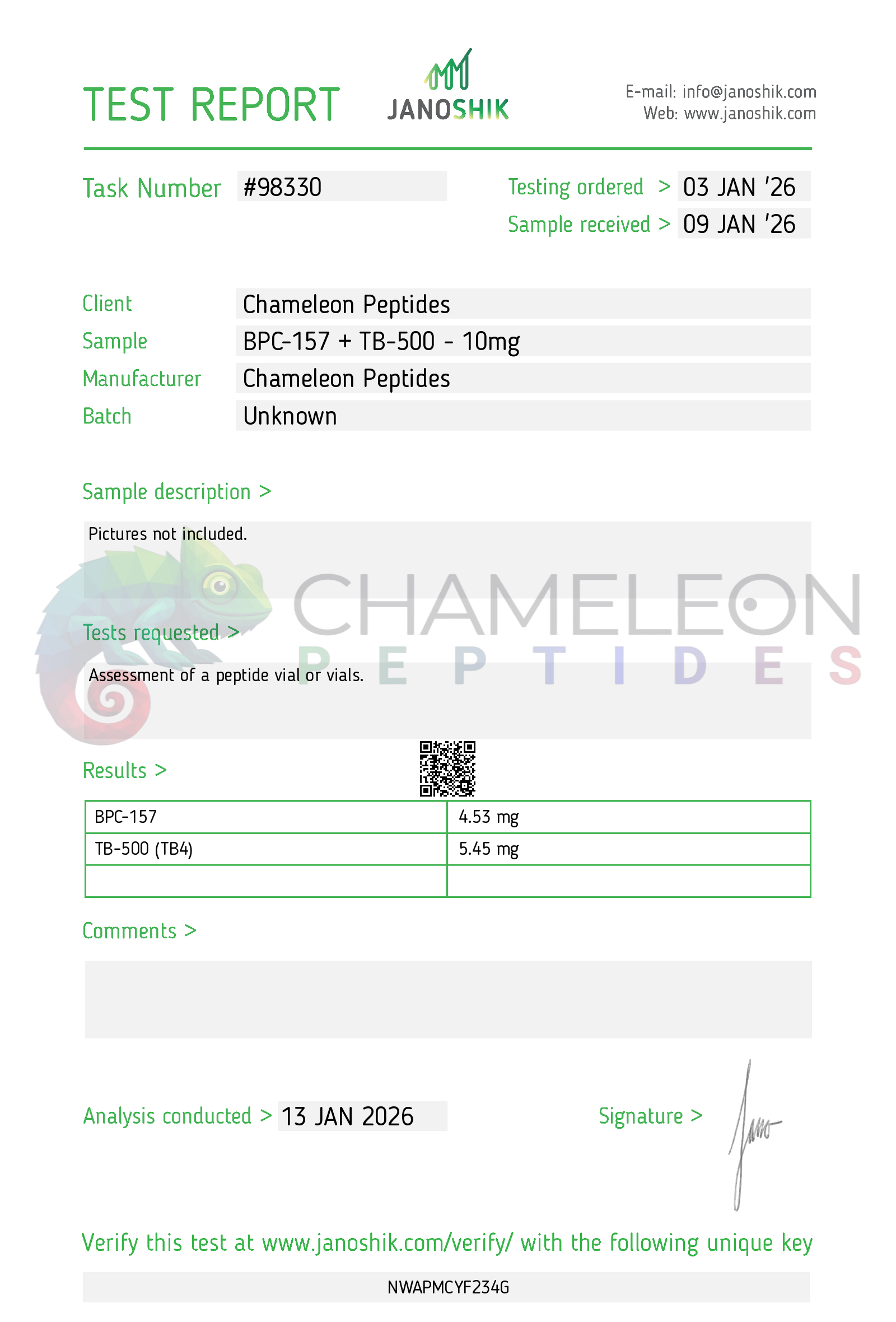
Every lot of this combination product supplied by Chameleon Peptides undergoes independent third-party testing by Janoshik Analytical, an ISO/IEC 17025 accredited analytical laboratory specializing in peptide and pharmaceutical compound analysis. This accreditation represents the international standard for the competence of testing and calibration laboratories, ensuring that all analytical results meet rigorous quality and reliability criteria.
Current Lot Testing Results
- Purity: ≥99% per component as determined by high-performance liquid chromatography (HPLC). Each peptide component is individually verified to exceed the purity specification threshold.
- Identity Confirmation: Molecular identity of both BPC-157 (1419.53 Da) and TB-500 (~4963 Da) confirmed via mass spectrometry (MS), verifying that observed molecular weights match theoretical values for each component.
Why Third-Party Testing Matters for Research
The quality and purity of research peptides are critical variables that can directly impact experimental reproducibility and data integrity. For combination products containing peptides of substantially different molecular weights, HPLC and MS verification of both components ensures correct identification and purity. Independent third-party testing by an ISO/IEC 17025 accredited facility provides researchers with verified analytical data from a laboratory that operates under externally audited quality management systems.
Certificates of Analysis for current lots are available upon request and are accessible via our Certificate of Analysis page.
Storage and Handling Guidelines
Proper storage and handling of research peptides is essential for maintaining compound integrity and ensuring experimental reproducibility. The following guidelines apply to this combination product as supplied by Chameleon Peptides.
Lyophilized (Unreconstituted) Powder
- Optimal long-term storage: -20°C in a sealed, desiccated container. Under these conditions, lyophilized peptides maintain stability for an extended period (typically 24+ months).
- Short-term storage: 2–8°C (standard laboratory refrigerator) is acceptable for periods of several weeks.
- Light protection: Store away from direct light. Amber vials or storage in opaque containers is recommended.
Reconstituted Solution
- Storage temperature: 2–8°C (refrigerated) immediately following reconstitution.
- Use window: Reconstituted solutions should be used within 30 days for optimal experimental consistency.
- Freeze-thaw cycles: Avoid repeated freeze-thaw cycles, which can cause peptide aggregation and reduce activity. If aliquoting is necessary, divide reconstituted solution into single-use aliquots before freezing.
- Recommended solvent: Bacteriostatic water (0.9% benzyl alcohol) is the standard reconstitution vehicle for laboratory use. Sterile water and phosphate-buffered saline (PBS) are also compatible.
Research Resources
Suggested Reading
For researchers beginning to explore the literature on these peptides, the following publications provide comprehensive entry points into the relevant preclinical research:
- Goldstein AL, Hannappel E, Kleinman HK. “Thymosin beta4: actin-sequestering protein moonlights to repair injured tissues.” Trends Mol Med. 2005;11(9):421-429. PMID: 16099219 โ Landmark review of Thymosin Beta-4’s dual intracellular and tissue repair functions.
- Sikiric P, Drmic D, Sever M, et al. “Stable Gastric Pentadecapeptide BPC 157 and wound repair.” Front Pharmacol. 2021;12:627533. PMC8275860 โ Comprehensive BPC-157 wound repair review across multiple tissue types.
- Smart N, et al. “Thymosin beta4 and angiogenesis: modes of action and research potential.” Angiogenesis. 2007;10(4):229-241. PMID: 17632766 โ Mechanisms of TB-4’s angiogenic activity and cardiovascular applications.
- Malinda KM, et al. “Thymosin beta4 accelerates wound repair.” J Invest Dermatol. 1999;113(3):364-368. PMID: 10469335 โ Original characterization of TB-4’s wound repair activity in vivo.
- Sikiric P, Seiwerth S, Rucman R, et al. “Brain-gut Axis and Pentadecapeptide BPC 157: Theoretical and Practical Implications.” Curr Neuropharmacol. 2016;14(8):857-865. PMID: 27138887 โ Brain-gut axis framework and NO system interactions of BPC-157.
Related Products
Researchers investigating individual components of this blend may also be interested in our standalone BPC-157 product page, which provides a comprehensive review of BPC-157’s individual preclinical research profile across gastrointestinal, musculoskeletal, vascular, neuroprotection, and wound repair research domains.
Research Use Only โ Legal Disclaimer
FOR RESEARCH USE ONLY โ NOT FOR HUMAN CONSUMPTION
BPC-157 + TB-500 as supplied by Chameleon Peptides is intended exclusively for use as a research compound in qualified laboratory settings. This product is not a compound, food, dietary supplement, or cosmetic product. It has not been approved by the U.S. Food and Drug Administration (FDA) or any equivalent regulatory authority for any human or veterinary application.
This product must not be used for any diagnostic, research-relevant, or clinical purpose in humans or animals. It is the sole responsibility of the purchaser to ensure that all local, state, federal, and international regulations governing the purchase, possession, and use of research compounds are observed.
The scientific literature referenced on this page describes observations from preclinical research conducted in animal models and in vitro laboratory systems. These references are provided for informational and educational purposes only and do not constitute claims of efficacy, safety, or suitability for any human application. No information presented on this page should be interpreted as medical advice or as an endorsement of human use.
By purchasing this product, the buyer acknowledges that it will be used only in accordance with applicable research regulations and that Chameleon Peptides bears no responsibility for any misuse of this compound.
FOR LABORATORY RESEARCH USE ONLY โ NOT FOR HUMAN CONSUMPTION